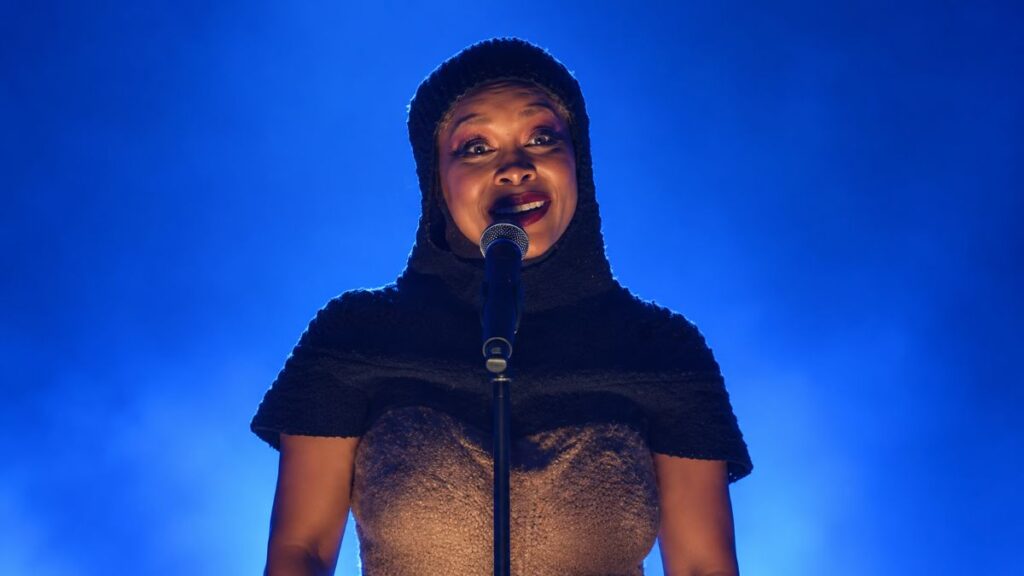
A distinct artistic universe, not just a genre label
Erykah Badu emerged in the 1990s as a central figure in neo-soul, but the term has never captured the entire range of her work. Her voice draws from jazz phrasing, gospel inflection and conversational wit; her arrangements can be intimate, psychedelic or rhythmically abrasive. *Baduizm* established an unmistakable identity through songs that sounded reflective and stubbornly independent.
Her public image and musical choices are bound together by an insistence on self-definition. She invites listeners into a world with its own visual language, humor and spiritual questions rather than trying to approximate whatever pop sounds are dominant.
From *Mama’s Gun* to restless experimentation
*Mama’s Gun* expanded the emotional and musical vocabulary, placing “Bag Lady” and “Didn’t Cha Know?” beside arrangements that reward close listening. *New Amerykah Part One* engaged more openly with social and political ideas while pushing harder into electronic textures and fractured grooves. Her later collaborations, including work with the Alchemist, continue the pattern of placing an idiosyncratic vocal presence in new production settings.
Badu’s consequence lies in the permission she created for R&B artists to be strange, funny, political and spiritually searching without making those choices feel like departures from Black popular-music tradition.
Essential listening
Begin with “On & On,” “Next Lifetime,” “Bag Lady,” “Didn’t Cha Know?” and “Window Seat.” Hear *Baduizm*, *Mama’s Gun* and *New Amerykah Part One* as different stages of an evolving artistic language. Badu matters because she made independence of mind audible—not just a personality trait, but a musical method.
The larger impact
Badu’s importance is tied to a rare ability to keep a recognizable sensibility across very different production worlds. The voice, the humor and the sideways approach to rhythm make the music identifiable whether it is minimal, jazz-inflected or aggressively electronic. That continuity has encouraged generations of artists to treat eccentricity as a serious musical resource. Her work suggests that soulful tradition is not a fixed set of sounds but an ongoing practice of invention and self-possession.
The Conversation